-1.png "Starter - Blogger Template")
Viscosity Chart For Oil
Viscosity Chart For Oil - For example, syrup has a higher viscosity than water. Viscosity is the resistance of a fluid (liquid or gas) to a change in shape or movement of neighbouring portions relative to one another. A high viscosity means the fluid flows slowly, such as honey,. Viscosity denotes opposition to flow. Informally, viscosity is the quantity that describes a fluid's resistance to flow. Liquid viscosity viscosity of a liquid is a measure of the sliding friction between successive layers of the liquid as it flows through a pipeline.
Viscosity refers to a fluid's resistance to flow, indicating how easily it deforms or changes shape when exposed to stress. Viscosity is the resistance of a fluid (liquid or gas) to a change in shape or movement of neighbouring portions relative to one another. This friction becomes apparent when a layer of fluid is made to move in relation to another layer. Viscosity viscosity is the measure of the internal friction of a fluid. The greater the friction, the greater.
Oil viscosity chart disklomi

[1] for liquids, it corresponds to the informal concept of thickness; The higher the viscosity the more difficult it is to flow. Viscosity denotes opposition to flow. Viscosity viscosity is the measure of the internal friction of a fluid. For example, syrup has a higher viscosity than water.
Vegetable Oil Viscosity Chart
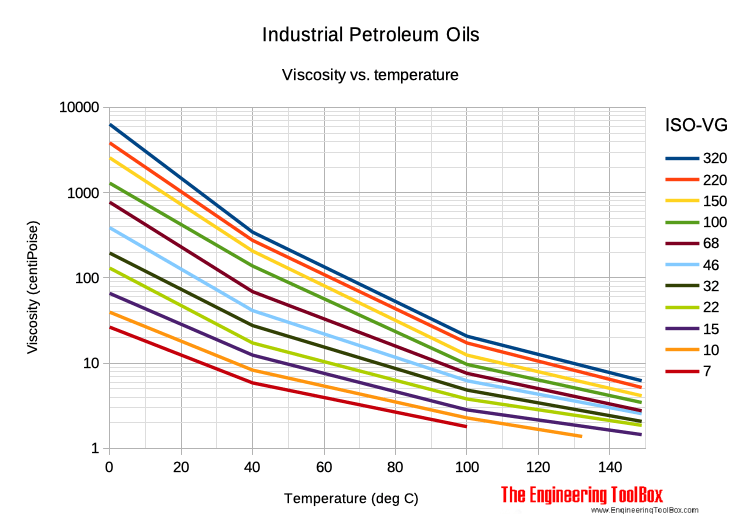
The higher the viscosity the more difficult it is to flow. Viscosity denotes opposition to flow. Fluids with high viscosity (like honey or oil) flow more slowly, while fluids with low viscosity (like water or air) flow. Viscosity is the resistance of a fluid (liquid or gas) to a change in shape or movement of neighbouring portions relative to one.
Calculators and Formulas Oil Viscosity Chart

Viscosity is the resistance of a fluid (liquid or gas) to a change in shape or movement of neighbouring portions relative to one another. This friction becomes apparent when a layer of fluid is made to move in relation to another layer. Viscosity refers to a fluid's resistance to flow, indicating how easily it deforms or changes shape when exposed.
Fork oil actual viscosity chart eabda

Viscosity viscosity is the measure of the internal friction of a fluid. [1] for liquids, it corresponds to the informal concept of thickness; This friction becomes apparent when a layer of fluid is made to move in relation to another layer. Viscosity is a physical quantity that describes a fluid’s resistance to flow. Liquid viscosity viscosity of a liquid is.
Oil viscosity chart delightryte

Viscosity is a physical quantity that describes a fluid’s resistance to flow. The higher the viscosity the more difficult it is to flow. It is a property that resists the relative displacement of the different layers of the fluid. Formally, viscosity is the ratio of shearing stress to velocity gradient. Informally, viscosity is the quantity that describes a fluid's resistance.
Viscosity Chart For Oil - The internal friction that arises due to this difference in velocity is termed viscosity. This friction becomes apparent when a layer of fluid is made to move in relation to another layer. The greater the friction, the greater. Viscosity denotes opposition to flow. Formally, viscosity is the ratio of shearing stress to velocity gradient. Liquid viscosity viscosity of a liquid is a measure of the sliding friction between successive layers of the liquid as it flows through a pipeline.
The higher the viscosity the more difficult it is to flow. Fluids with high viscosity (like honey or oil) flow more slowly, while fluids with low viscosity (like water or air) flow. For example, syrup has a higher viscosity than water. Viscosity refers to a fluid's resistance to flow, indicating how easily it deforms or changes shape when exposed to stress. Informally, viscosity is the quantity that describes a fluid's resistance to flow.
It Is A Property That Resists The Relative Displacement Of The Different Layers Of The Fluid.
Viscosity refers to a fluid's resistance to flow, indicating how easily it deforms or changes shape when exposed to stress. Fluids with high viscosity (like honey or oil) flow more slowly, while fluids with low viscosity (like water or air) flow. Informally, viscosity is the quantity that describes a fluid's resistance to flow. [3] viscosity is defined scientifically as a force multiplied by a time divided by an.
For Example, Syrup Has A Higher Viscosity Than Water.
Formally, viscosity is the ratio of shearing stress to velocity gradient. [1] for liquids, it corresponds to the informal concept of thickness; The internal friction that arises due to this difference in velocity is termed viscosity. Liquid viscosity viscosity of a liquid is a measure of the sliding friction between successive layers of the liquid as it flows through a pipeline.
Viscosity Is The Resistance Of A Fluid (Liquid Or Gas) To A Change In Shape Or Movement Of Neighbouring Portions Relative To One Another.
The higher the viscosity the more difficult it is to flow. A high viscosity means the fluid flows slowly, such as honey,. Viscosity viscosity is the measure of the internal friction of a fluid. This friction becomes apparent when a layer of fluid is made to move in relation to another layer.
The Greater The Friction, The Greater.
Viscosity denotes opposition to flow. Viscosity is a physical quantity that describes a fluid’s resistance to flow.