-1.png "Starter - Blogger Template")
Unit Circle Chart
Unit Circle Chart - Unit circle introduction unit circle unit circle the trig functions & right triangle trig ratios For each point on the unit circle, select the angle that corresponds to it. Discover how to measure angles, distances, and heights using trigonometric ratios and the unit circle. Click each dot on the image to select an answer. Uh oh, it looks like we ran into an error. If this problem persists, tell us.
Learn how to use the unit circle to define sine, cosine, and tangent for all real numbers. If this problem persists, tell us. Learn how to use the unit circle to define sine, cosine, and tangent for all real numbers. For each point on the unit circle, select the angle that corresponds to it. Discover how to measure angles, distances, and heights using trigonometric ratios and the unit circle.

For each point on the unit circle, select the angle that corresponds to it. Discover how to measure angles, distances, and heights using trigonometric ratios and the unit circle. Learn how to use the unit circle to define sine, cosine, and tangent for all real numbers. Click each dot on the image to select an answer. Uh oh, it looks.

Learn how to use the unit circle to define sine, cosine, and tangent for all real numbers. Discover how to measure angles, distances, and heights using trigonometric ratios and the unit circle. If this problem persists, tell us. You might be surprised at how we can use the behavior of those functions to. Algebra 2 > unit 11 lesson 1:

About this unit let's extend trigonometric ratios sine, cosine, and tangent into functions that are defined for all real numbers. The unit circle is used to help you find the exact values of trig functions of special angles (0°, 30°, 45°, 60°, 90° or their radian counterparts) and the multiples of those special angles. Click each dot on the image.

Algebra 2 > unit 11 lesson 1: The unit circle is used to help you find the exact values of trig functions of special angles (0°, 30°, 45°, 60°, 90° or their radian counterparts) and the multiples of those special angles. Click each dot on the image to select an answer. You might be surprised at how we can use.
Unit Circle Calculator Unit Circle Chart
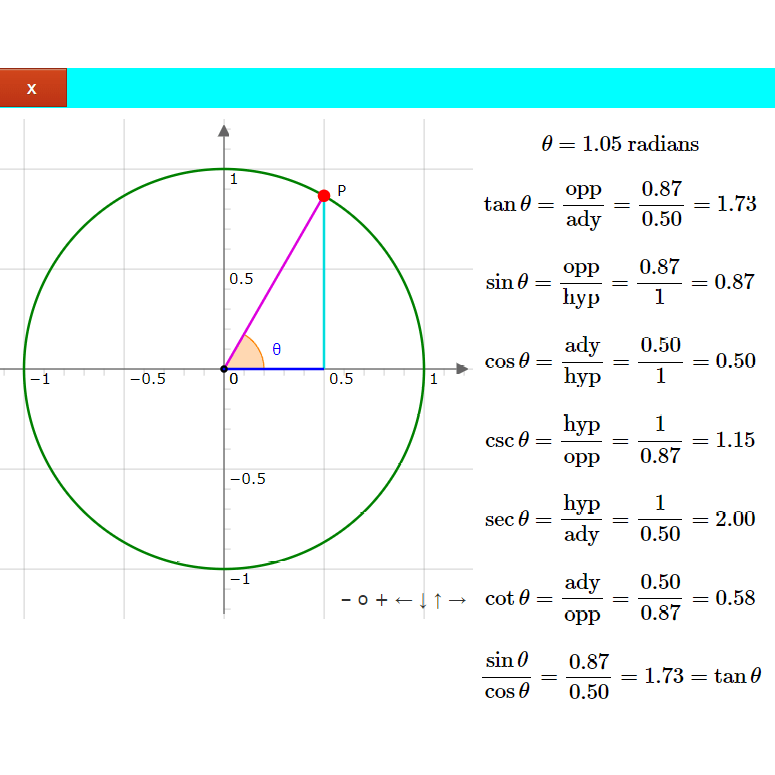
For each point on the unit circle, select the angle that corresponds to it. For each point on the unit circle, select the angle that corresponds to it. If this problem persists, tell us. Discover how to measure angles, distances, and heights using trigonometric ratios and the unit circle. You might be surprised at how we can use the behavior.
Unit Circle Chart - Learn how to use the unit circle to define sine, cosine, and tangent for all real numbers. Unit circle introduction unit circle unit circle the trig functions & right triangle trig ratios Click each dot on the image to select an answer. Learn how to use the unit circle to define sine, cosine, and tangent for all real numbers. The unit circle is used to help you find the exact values of trig functions of special angles (0°, 30°, 45°, 60°, 90° or their radian counterparts) and the multiples of those special angles. Click each dot on the image to select an answer.
Click each dot on the image to select an answer. Unit circle introduction unit circle unit circle the trig functions & right triangle trig ratios For each point on the unit circle, select the angle that corresponds to it. You might be surprised at how we can use the behavior of those functions to. If this problem persists, tell us.
For Each Point On The Unit Circle, Select The Angle That Corresponds To It.
Click each dot on the image to select an answer. Uh oh, it looks like we ran into an error. Learn how to use the unit circle to define sine, cosine, and tangent for all real numbers. Click each dot on the image to select an answer.
Discover How To Measure Angles, Distances, And Heights Using Trigonometric Ratios And The Unit Circle.
The unit circle is used to help you find the exact values of trig functions of special angles (0°, 30°, 45°, 60°, 90° or their radian counterparts) and the multiples of those special angles. About this unit let's extend trigonometric ratios sine, cosine, and tangent into functions that are defined for all real numbers. Learn how to use the unit circle to define sine, cosine, and tangent for all real numbers. You might be surprised at how we can use the behavior of those functions to.
For Each Point On The Unit Circle, Select The Angle That Corresponds To It.
Algebra 2 > unit 11 lesson 1: Unit circle introduction unit circle unit circle the trig functions & right triangle trig ratios If this problem persists, tell us.