-1.png "Starter - Blogger Template")
Stacked Area Chart
Stacked Area Chart - It's particularly useful for visualizing the composition of a whole over time. What is a stacked area chart/stacked bar chart? In this article, we will explore what stacked area charts are, when to use them, the ideal data for this chart type, situations where they might not be the best choice, and the benefits they offer. A stacked area chart is the extension of a basic area chart. Stacked area graphs work the same way as simple area graphs, except for displaying multiple data series that start each point from the point left by the previous data series. What is a stacked area chart?
A stacked area chart or stacked area graph is a data visualization type that shows the cumulative contribution of different categories or series to a total. Stacked area charts typically allow us to visualize how a measure, observed through multiple category values, changes over time. This type of plot is used to show how multiple variables change over time, with each variable stacked on top of the previous ones. It displays the evolution of a numerical value for several groups on the same chart, stacked on top of each other. A stacked area chart is the extension of a basic area chart.
Stacked Area Chart with Dark Blue theme Area Charts

What is a stacked area chart? It displays the evolution of a numerical value for several groups on the same chart, stacked on top of each other. It's particularly useful for visualizing the composition of a whole over time. In this article, we explore when to use stacked area charts and when to. A stacked area chart is an extension.
Stacked Area Chart Data Viz Project

A stacked area chart is an extension of a regular area chart. It displays the evolution of a numerical value for several groups on the same chart, stacked on top of each other. Each series is represented by a different color,. A stacked area chart or stacked area graph is a data visualization type that shows the cumulative contribution of.
What Is Stacked Area Chart and When to Use It
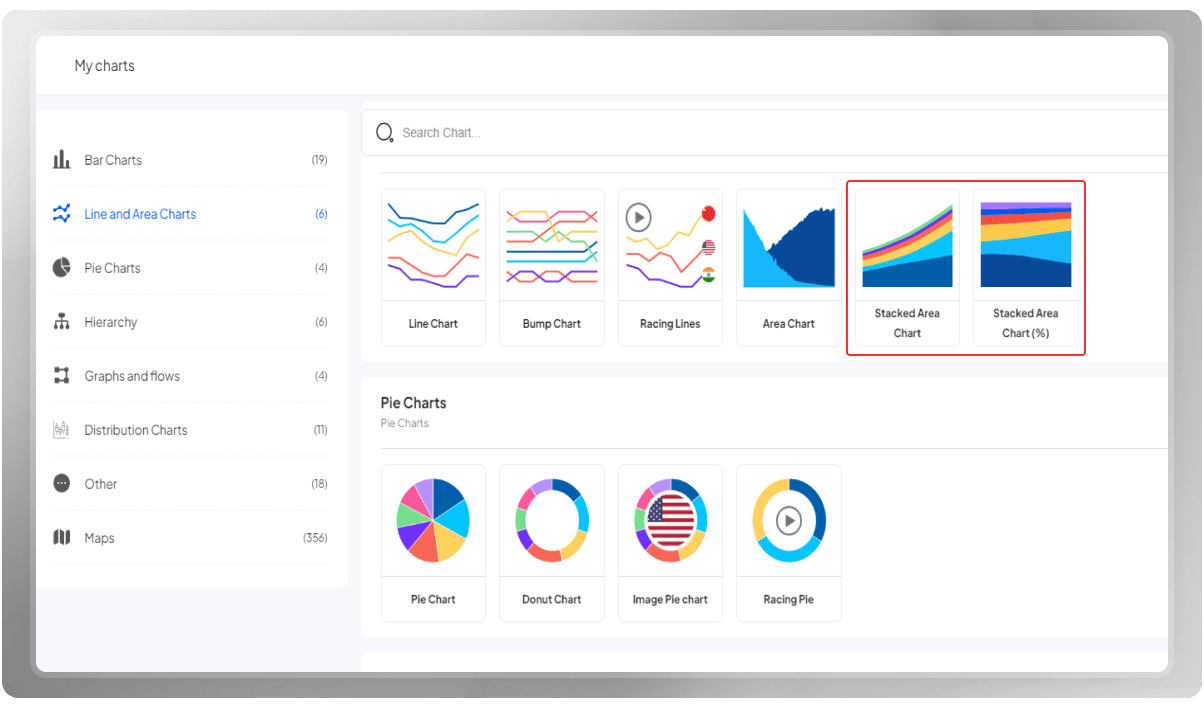
A stacked area chart is the extension of a basic area chart. A stacked area chart or stacked area graph is a data visualization type that shows the cumulative contribution of different categories or series to a total. It stacks multiple data series on top of one another, allowing viewers to see not only the overall. In this article, we.
Stacked Area Chart A Comprehensive Go Chart

This type of plot is used to show how multiple variables change over time, with each variable stacked on top of the previous ones. A stacked area chart is the extension of a basic area chart. A stacked area chart is a type of data visualization that displays the cumulative totals of several data series over time. A stacked area.
Creating a Stacked Area Chart Visualizing U.S. Migration Trends
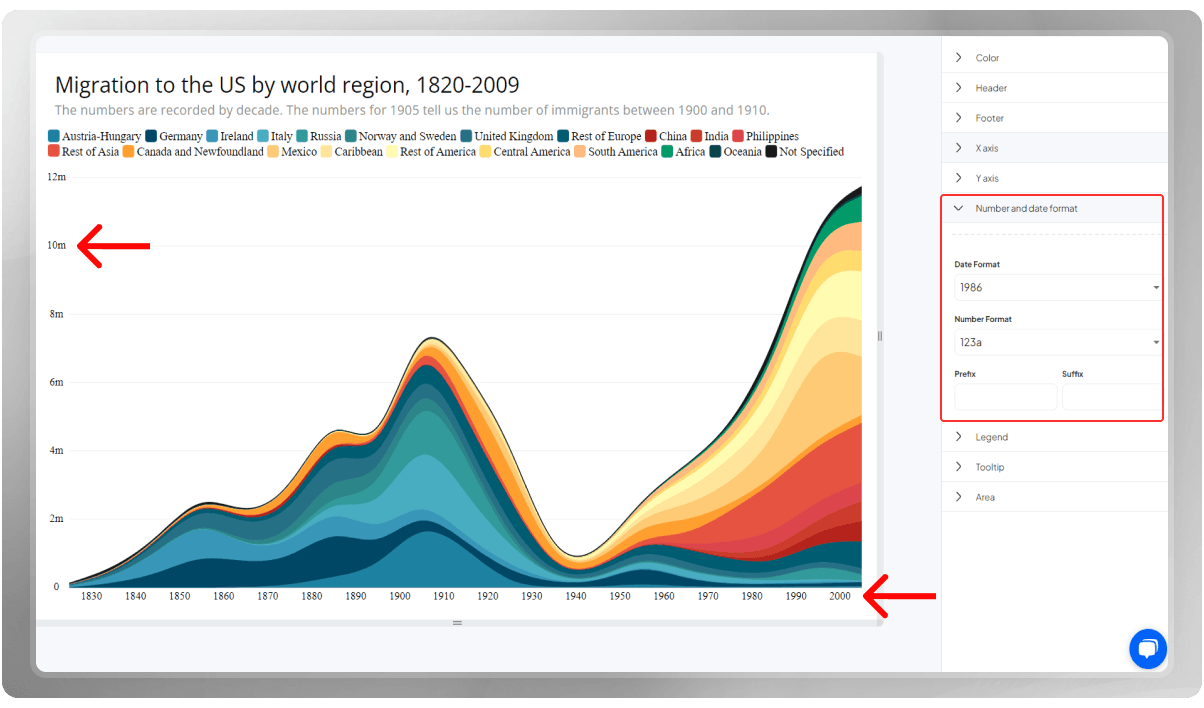
This type of plot is used to show how multiple variables change over time, with each variable stacked on top of the previous ones. It stacks multiple data series on top of one another, allowing viewers to see not only the overall. It displays the evolution of a numerical value for several groups on the same chart, stacked on top.
Stacked Area Chart - It stacks multiple data series on top of one another, allowing viewers to see not only the overall. Stacked area charts typically allow us to visualize how a measure, observed through multiple category values, changes over time. In this article, we explore when to use stacked area charts and when to. Each series is represented by a different color,. What is a stacked area chart/stacked bar chart? It's particularly useful for visualizing the composition of a whole over time.
Each series is represented by a different color,. Stacked area graphs work the same way as simple area graphs, except for displaying multiple data series that start each point from the point left by the previous data series. A stacked area chart is the extension of a basic area chart. It displays the evolution of a numerical value for several groups on the same chart, stacked on top of each other. A stacked area chart is a type of data visualization that displays the cumulative totals of several data series over time.
A Stacked Area Chart Is A Type Of Data Visualization That Displays The Cumulative Totals Of Several Data Series Over Time.
Stacked area charts typically allow us to visualize how a measure, observed through multiple category values, changes over time. What is a stacked area chart? An extensive description of stacked area graph. A stacked area chart or stacked area graph is a data visualization type that shows the cumulative contribution of different categories or series to a total.
What Is A Stacked Area Chart/Stacked Bar Chart?
A stacked area chart is the extension of a basic area chart. In this article, we will explore what stacked area charts are, when to use them, the ideal data for this chart type, situations where they might not be the best choice, and the benefits they offer. Definition, examples, input data, common caveats, tool to build it and potential alternatives. Stacked area graphs work the same way as simple area graphs, except for displaying multiple data series that start each point from the point left by the previous data series.
A Stacked Area Chart Is An Extension Of A Regular Area Chart.
In this article, we explore when to use stacked area charts and when to. What is a stacked area chart? It's particularly useful for visualizing the composition of a whole over time. Learn what a stacked area chart is, when to use it, how to read it correctly, common pitfalls, and how to build one in excel or bi tools.
It Stacks Multiple Data Series On Top Of One Another, Allowing Viewers To See Not Only The Overall.
Each series is represented by a different color,. This type of plot is used to show how multiple variables change over time, with each variable stacked on top of the previous ones. It displays the evolution of a numerical value for several groups on the same chart, stacked on top of each other.