-1.png "Starter - Blogger Template")
Python Bar Chart
Python Bar Chart - This will always return true and 1 == 1 will always return. It is a valid identifier just like _foo, foo_ or _f_o_o_. In python 3, your example range (n) [::step] produces a range object, not a list. To really see what is happening, you need to coerce the range to a list, np.array, etc. To translate this pseudocode into python you would need to know the data structures being referenced, and a bit more of the algorithm implementation. In python this is simply =.
As far as the python languages is concerned, _ generally has no special meaning. This will always return true and 1 == 1 will always return. In a comment on this question, i saw a statement that recommended using result is not none vs result != none what is the difference? Using 'or' in an 'if' statement (python) [duplicate] asked 8 years, 1 month ago modified 4 months ago viewed 167k times 96 what does the “at” (@) symbol do in python?
Matplotlib Bar chart Python Tutorial

The only exception are match statements since python. In python this is simply =. Using 'or' in an 'if' statement (python) [duplicate] asked 8 years, 1 month ago modified 4 months ago viewed 167k times To translate this pseudocode into python you would need to know the data structures being referenced, and a bit more of the algorithm implementation. @.
Bar chart using Plotly in Python

And why might one be recommended over the other? In python this is simply =. To translate this pseudocode into python you would need to know the data structures being referenced, and a bit more of the algorithm implementation. As far as the python languages is concerned, _ generally has no special meaning. Using 'or' in an 'if' statement (python).
Stacked bar chart python

The only exception are match statements since python. For example, what does the following operation 10 >> This will always return true and 1 == 1 will always return. It is a valid identifier just like _foo, foo_ or _f_o_o_. In a comment on this question, i saw a statement that recommended using result is not none vs result !=.
Python Charts Beautiful Bar Charts in Matplotlib
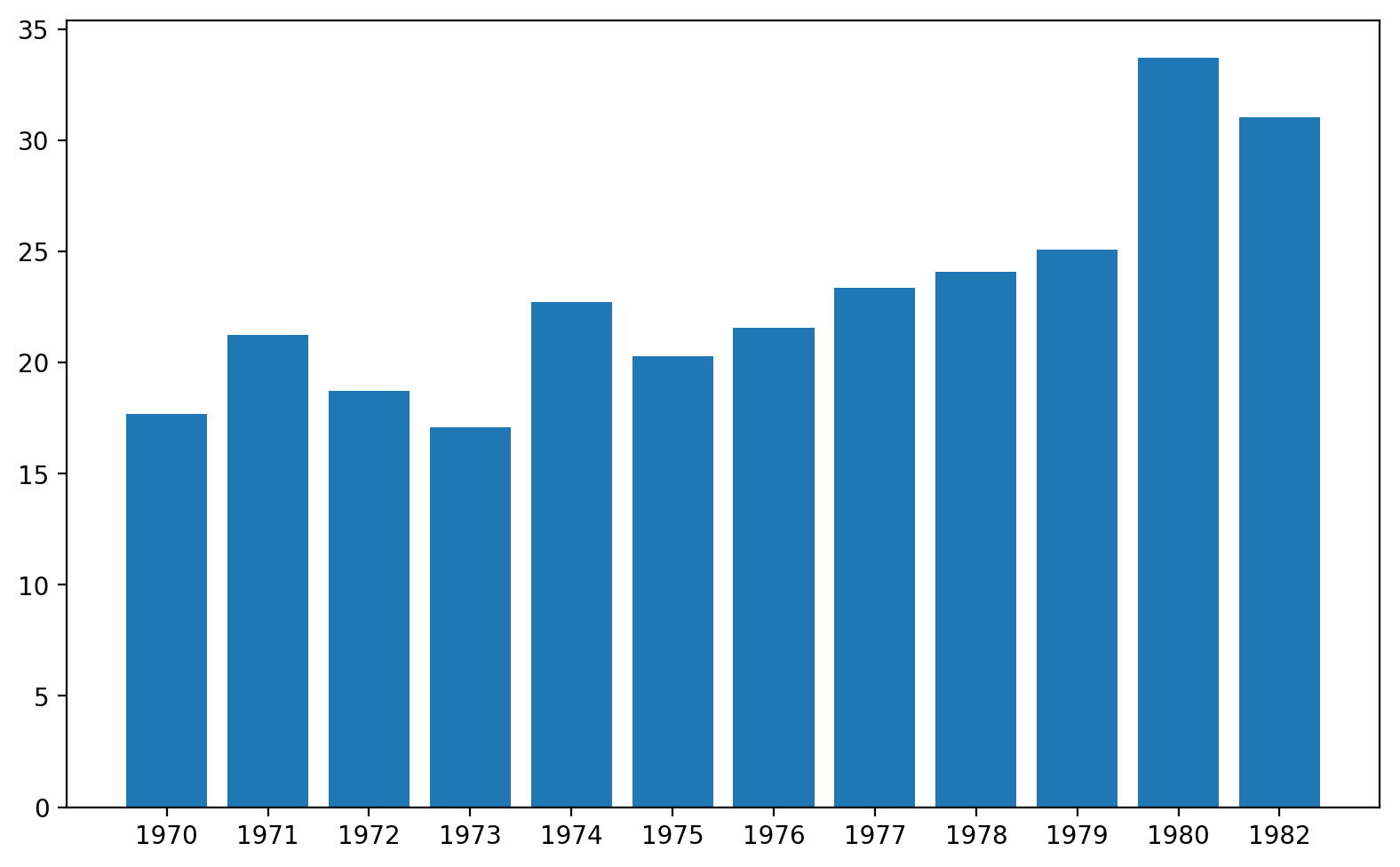
Unary arithmetic and bitwise/binary operations and 6.7. This will always return true and 1 == 1 will always return. In python 3, your example range (n) [::step] produces a range object, not a list. In a comment on this question, i saw a statement that recommended using result is not none vs result != none what is the difference? To.
Generate A Bar Chart Using Matplotlib In Python python How to remove

To translate this pseudocode into python you would need to know the data structures being referenced, and a bit more of the algorithm implementation. In python this is simply =. @ symbol is a syntactic sugar python provides to utilize decorator, to paraphrase the question, it's exactly about what does decorator do in python? For example, what does the following.
Python Bar Chart - In python 3, your example range (n) [::step] produces a range object, not a list. This will always return true and 1 == 1 will always return. In python this is simply =. For example, what does the following operation 10 >> As far as the python languages is concerned, _ generally has no special meaning. Using 'or' in an 'if' statement (python) [duplicate] asked 8 years, 1 month ago modified 4 months ago viewed 167k times
@ symbol is a syntactic sugar python provides to utilize decorator, to paraphrase the question, it's exactly about what does decorator do in python? In python 3, your example range (n) [::step] produces a range object, not a list. It is a valid identifier just like _foo, foo_ or _f_o_o_. 96 what does the “at” (@) symbol do in python? For example, what does the following operation 10 >>
For Example, What Does The Following Operation 10 ≫≫
Unary arithmetic and bitwise/binary operations and 6.7. 96 what does the “at” (@) symbol do in python? In python 3, your example range (n) [::step] produces a range object, not a list. Using 'or' in an 'if' statement (python) [duplicate] asked 8 years, 1 month ago modified 4 months ago viewed 167k times
In A Comment On This Question, I Saw A Statement That Recommended Using Result Is Not None Vs Result != None What Is The Difference?
It is a valid identifier just like _foo, foo_ or _f_o_o_. To translate this pseudocode into python you would need to know the data structures being referenced, and a bit more of the algorithm implementation. In python this is simply =. As far as the python languages is concerned, _ generally has no special meaning.
To Really See What Is Happening, You Need To Coerce The Range To A List, Np.array, Etc.
And why might one be recommended over the other? This will always return true and 1 == 1 will always return. @ symbol is a syntactic sugar python provides to utilize decorator, to paraphrase the question, it's exactly about what does decorator do in python? There's the != (not equal) operator that returns true when two values differ, though be careful with the types because 1 != 1.